
Simply attach to your child’s pencil
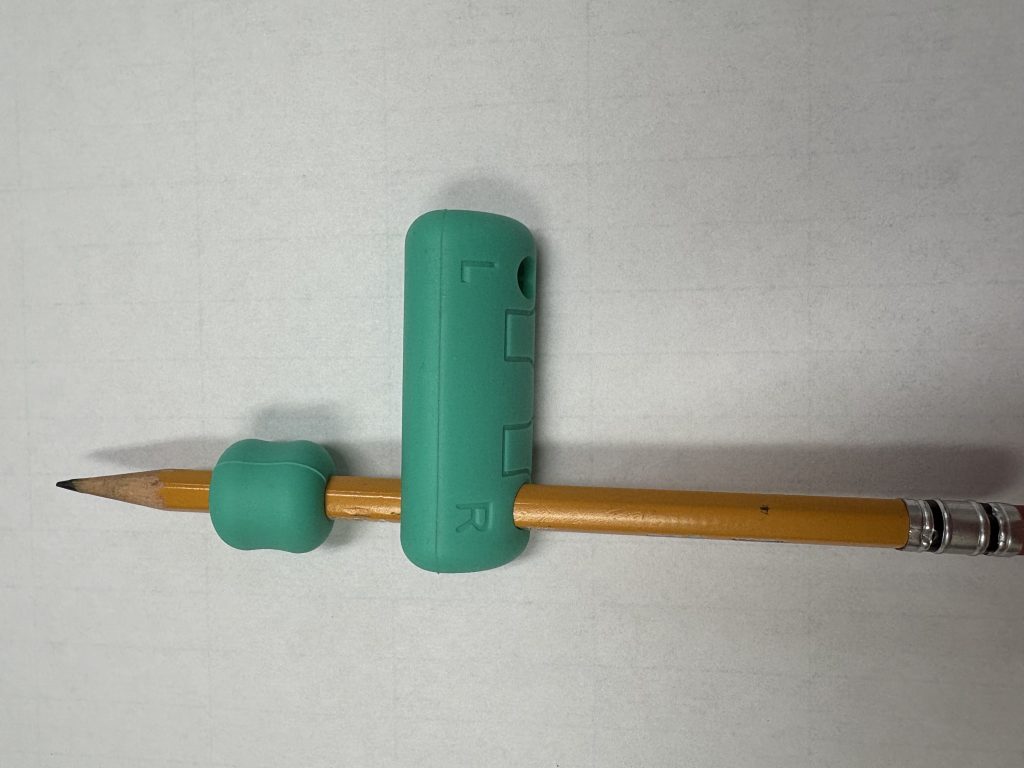
- Attach whichever configuration that works for the child. Pictured here is the base and the handle grips.
- Experiment with the different grips and configurations.
- Build-A-Grip attaches to to your child’s pencil or other writing tools.
- If using the base it should be close to the pencil tip.
- If using two grips move the top grip up or down the pencil shaft to fit the child’s hand.
Comfortably fits your child’s hand
- The Handle is tapered to fit right where there is a gap in the bone development of younger children.
- The handle and webster open up the space between the thumb and index fingers.
- The handle has right and left holds for right or left hand.

Develop healthy grip techniques
- Supports tired hands and decreases fatigue.
- Helps alleviate pain in their hand when writing.
- Leads to academic success.

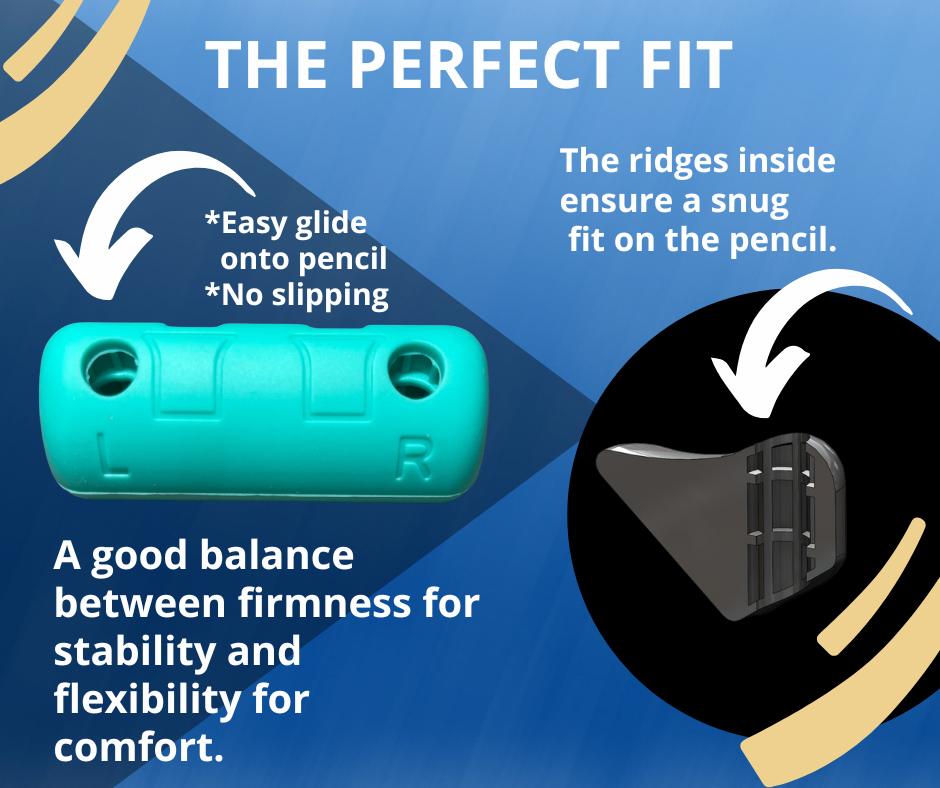
- Build-A-Grip is a comprehensive and innovative writing system.
- The patented design address the issue of poorly fitting pencil grips.
- The interior circumferential ridges provides a secure hold on the pencil.
- The grips material balances stability and flexibility.
- Provides improved control and comfort when writing.
- The pencil glides onto the grip smoothly and firmly.

This is a pronated grasp. It is a developmentally normal grasp pattern used by children between the ages of 24 and 36 months. After the age of approximately 42 months this would be considered immature. The best Build-a-Grip pieces to use in correcting this grasp pattern would be to use the handle and the base. Using these pieces does not force the hand into any position, but promotes correct finger placement and opens the webspace.


This is a supinated grasp. It is not a grasp we want to see children use. We would recommend using the base and the Webster to correct this grasp pattern.
The palm pillow is excellent for giving a cue for placing the wrist on the table.


This is often referred to as the claw grasp or digital grasp.
The best Build-a-Grip pieces to use are the base and handle.
These pieces are recommended to encourage a more neutral hand position.


This is the thumb tuck grasp. It is not a natural position to hold a pencil, it’s stressful on the thumb and doesn’t allow for free movement of the fingers. For this grasp we recommend the base and the handle. After the thumb becomes more comfortable in a better position the progression can be made to the Webster.


This is called the fisted grasp, used by for a very young child. Children often use this grasp when they have weakness in the arms. It is a grasp children use in an attempt to get control over the pencil. For this grasp we recommend the base and the handle. This combination of pieces still provides a large area for the fingers to grasp but in a more functional position.


This is the thumb wrap grasp. It usually occurs when a child doesn’t feel control over the pencil. Children will wrap the thumb around the pencil to get more control of the pencil. This grasp doesn’t allow for free movement of the lead. For this type of grasp we recommend the base and the handle, with progression to the Webster.


This is a lateral pinch grasp. This grasp doesn’t allow the space between the thumb and the pointer finger to open up which is often seen when children have poor stability in the hands. For this type of grasp we recommend the base and the handle. When the handle is positioned in the palm it allows the pencil to be held back into the webspace.

Anatomy of the Pencil Grasp
- Build-A-Grip bridges the gap between readiness and maturity.
- Provides stability to the developing hand.
- Supports the gaps between the developing bones.
- Opens the webspace between the thumb and index fingers.
- Provides unrestricted movement in finger flexion and extension to maneuver the pencil effectively.

Inefficient Grip Patterns and Hand Fatigue
- Build-A-Grip is committed to preventing and addressing grip problems through its specially designed and technologically innovative writing system.
- Fatigue is an issue for many children who hold the pencil inefficiently.
- Helps children avoid inefficient grip patterns.
- Corrects poor grip habits that may have developed over time.

Patented Progressive Support
- What sets Build-A-Grip apart is its patented progressive support system.
- Adapts as the child’s hand grows and changes.
- The components of the system are interchangeable.
- Takes into account the development of the child’s entire hand.
- Helps to strengthen the muscles that support their tendons and encourage the formation of a healthy hand.
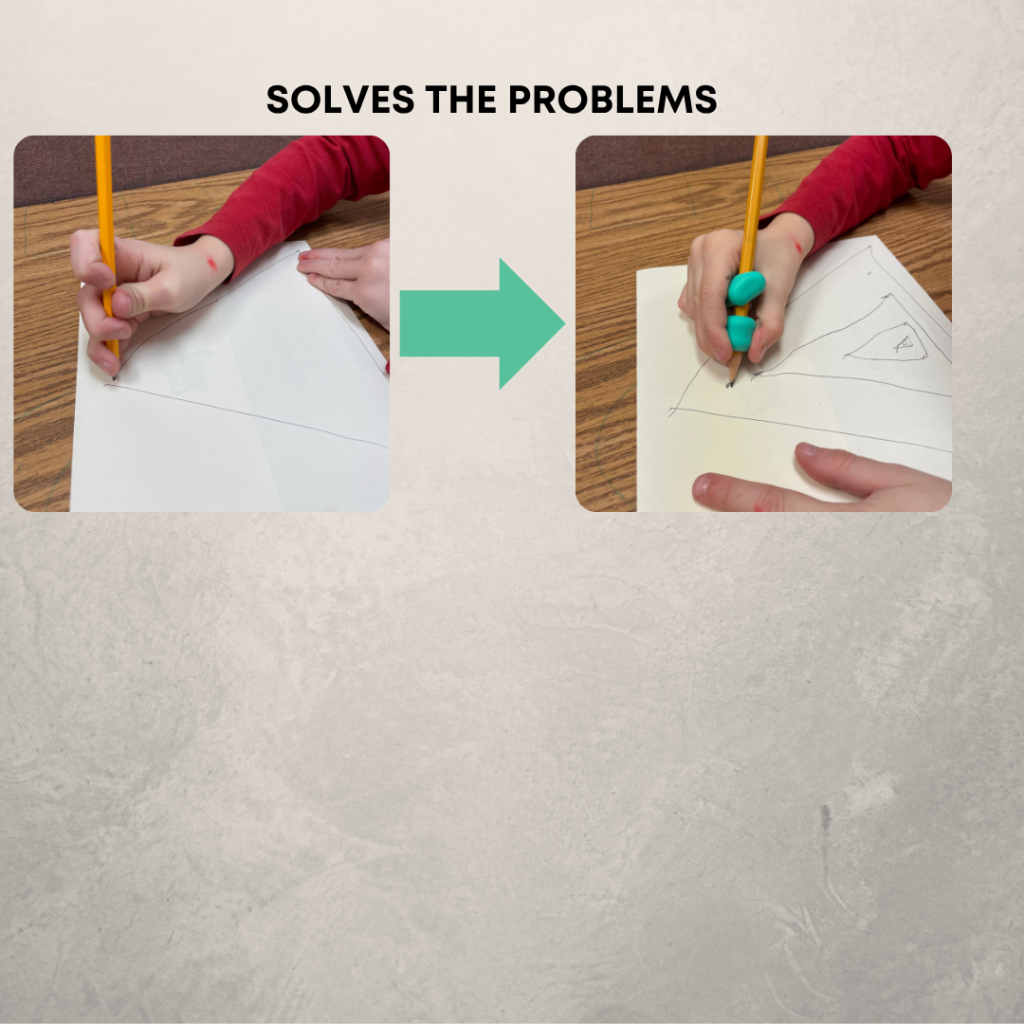
Comfortable and Effective Writing
Build-A-Grip’s innovative system is a game-changer. By using the Build-A-Grip system, children can experience comfortable and effective writing. They can say goodbye to discomfort, pain, and fatigue associated with grip issues. With the help of Build-A-Grip, children can develop proper grip techniques, ensuring that their writing experience becomes more enjoyable, effortless, and successful.
Game changer for children’s success.
Don’t let grip issues hinder your child’s academic progress and enjoyment of writing. Discover how Build-A-Grip’s patented writing system can transform your child’s grip and enhance their writing experience. Help them build a healthy grip foundation for a lifetime of success.

Digital Range of Motion Practice
Watch them learn to enjoy writing and be excited again about school
With Build-A-Grip, children can overcome grip challenges, strengthen their hand muscles, and develop healthy grip habits. Ensure that your child can write comfortably and effectively with Build-A-Grip’s innovative system.
Join us on this journey to empower children and unlock their full potential in writing and beyond. Get started with Build-A-Grip today!

